

Last year at DERVOS, EnergyHub introduced the Virtual Power Plant (VPP) Maturity Model: a way to systematically measure the extent to which a VPP is delivering grid services similar to – or better than – those of conventional power plants. This year, they’ll show how today’s VPPs are supporting reliability and affordability in the real world, using data from more than 3M connected devices. From thermostat programs delivering flexible 6+ hour load shapes based on goals from grid operators, to a VPP delivering 300+ MW of load reduction in Ontario, to a multi-DER program helping defer millions in distribution grid investment in New England, the data say that VPPs are ready. So what will it take to get grid operators and planners to agree?
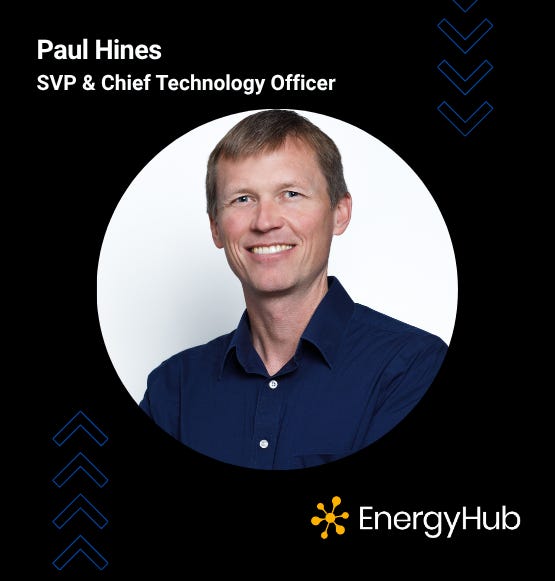
Paul Hines leads EnergyHub’s technical and product teams, guiding development of industry-leading solutions in distributed energy resource (DER) forecasting, DER optimization, and virtual power plant (VPP) management.
Before joining EnergyHub, Paul was the co-founder and CEO of Packetized Energy (acquired by EnergyHub), which used advanced algorithms to unlock new grid services from fleets of DERs.
With over 25 years of experience spanning academia, industry, and government, Paul has held power systems research and engineering roles at the University of Vermont as a tenured professor, the National Energy Technology Laboratory, the Federal Energy Regulatory Commission, Alstom ESCA, and Black and Veatch.
Paul earned a PhD in Engineering and Public Policy from Carnegie Mellon University, a Master’s in Electrical Engineering (Power Systems) from the University of Washington, and a Bachelor’s in Electrical Engineering from Seattle Pacific University.